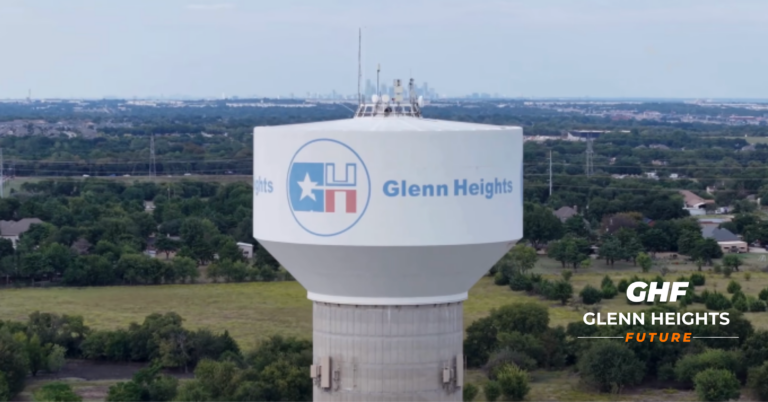
GLENN HEIGHTS – Glenn Heights residents could soon face a higher city property tax rate, even as questions continue over whether years of residential development are generating enough commercial growth to support the city’s future.
The Glenn Heights City Council is set to consider a 2026 property tax rate of $0.590821 per $100 of assessed value at its August 4th meeting. The proposal is part of the city’s annual budget process and would set the rate for presentation at a public hearing before final adoption in September.
The proposed rate is about 2.8 cents higher than the current rate of $0.562795 per $100 valuation, according to city budget documents.
If ultimately adopted, the increase would come as Glenn Heights continues experiencing rapid residential expansion.
Those approvals have prompted recurring questions from residents about whether commercial development is keeping pace with the number of rooftops being added across the city.
Glenn Heights Future previously reported that while residential construction continues, many residents have expressed concern that grocery stores, restaurants, employers, and other commercial investments have not expanded at the same rate, placing more demand on city infrastructure and services.
Infrastructure has also become a frequent topic during council meetings. Earlier this summer, city officials emphasized the need for long-term planning for water and wastewater systems as Glenn Heights continues to grow.
Another unanswered question involves the city’s proposed economic development agreement for the planned data center project.
Without that document, residents still do not know the full financial obligations, incentives, or anticipated return on investment associated with one of the city’s largest proposed commercial developments.
The timing has fueled additional public discussion as the city prepares to ask taxpayers to contribute more toward municipal operations.
City officials have not publicly linked the proposed tax rate to any single project or development. Instead, the August 4th agenda calls for council to receive the certified tax roll, review the no-new-revenue and voter-approval tax rates, and consider setting the proposed property tax rate for the upcoming fiscal year before public hearings are held in September.
Residents will have an opportunity to comment on both the proposed budget and tax rate during public hearings scheduled for Sept. 1 before the council’s anticipated adoption on September 8th.