EDITORIAL By Will Busby
The Glenn Heights Data Center Money Question, Explained Simply
Imagine a company built a data center in a nearby city called Richardson. That building sits on 8 acres of land (about 6 football fields) and is worth about $45 million.
Richardson taxes that building like it taxes everything else. If it got taxed at the full rate, it would bring in about $247,000 a year for the city. But Richardson gave the company a deal: pay only half. So instead, the city collects about $123,000 a year, and the company keeps the other half.
Now here’s the question for Glenn Heights.
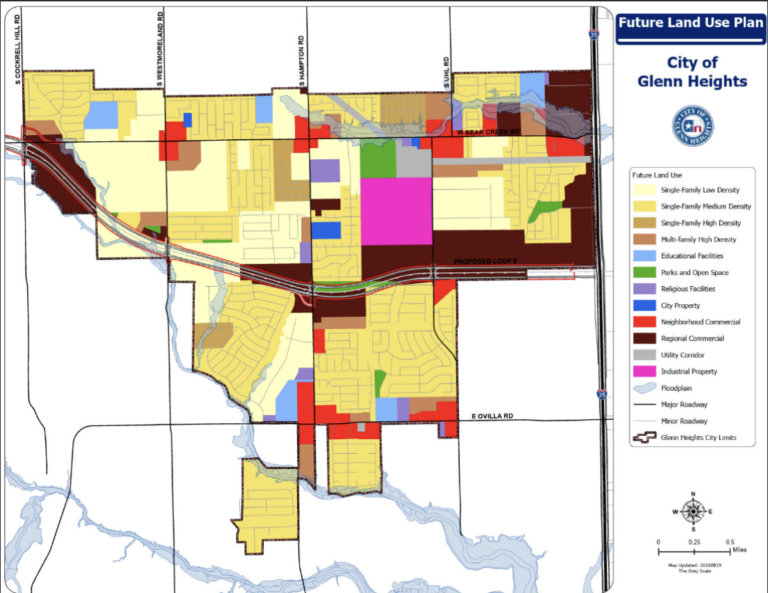
The data center planned for Glenn Heights sits on about 140 acres, which is 17 times bigger than the one in Richardson. If a data center that small brings in that much money for its city, even at half price, what should a data center 17 times bigger bring in for Glenn Heights?
Nobody outside city hall knows the answer right now, because the agreement between Glenn Heights and the company hasn’t been made public. That’s the piece missing from this story: we don’t know if Glenn Heights gave the company the same kind of “pay half” deal Richardson did.
Compare that to another option: houses.
If that same land in Glenn Heights were used for houses instead of a data center, it could fit about 119 one-acre homes. If each home brings the city about $5,000 a year (through property taxes and other city fees), all those homes together could bring in about $6.8 million over 10 years.
The data center, using the small Richardson building as our best guess, might bring in somewhere between $1.4 million and $3.4 million over 10 years, depending on whether it’s taxed in full or given a discount like Richardson’s.
So the simple version is this: houses might bring in two to four times more money for the city than the data center would, based on our best guess. But it’s still just a guess, because the real numbers are locked away in an agreement the public hasn’t seen. That’s exactly why residents deserve to see it.
Follow the full project: See GHF’s Glenn Heights Data Center timeline, Chapter 380 agreement, source documents and continuing coverage: www.glennheightsfuture.com/data-center