The Glenn Heights City Council is scheduled to consider whether the City should implement Automated License Plate Reader (ALPR) technology during its meeting on Tuesday, July 7.
The proposal appears as Agenda Item No. 2 and calls for discussion and possible action regarding Automated License Plate Reader software. The item is sponsored by Council Member Sherron Mosley and Glenn Heights Police Chief Dr. Glynell Horn.
While the agenda does not identify a specific vendor, the discussion began earlier this year. On Feb. 17, Mosley placed Flock Safety on the City Council agenda for discussion, introducing the technology to the Council. No formal action was taken at that meeting.
If approved Tuesday, Glenn Heights would join a growing number of Texas communities using Automated License Plate Reader technology as part of their public safety efforts.
What are Automated License Plate Readers?
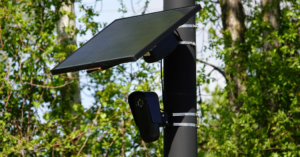
Automated License Plate Readers, commonly called ALPRs, are cameras that capture images of passing vehicles and use software to read license plate numbers. Depending on the system, they may also record the date, time, location, direction of travel and a description of the vehicle, including its make, model and color.
Unlike traditional traffic enforcement cameras, ALPR systems are generally not designed to issue speeding tickets or monitor traffic violations. Instead, they serve as investigative tools that can compare license plates against law enforcement databases or assist investigators after a crime has occurred.
Police departments across Texas use license plate reader technology to help locate stolen vehicles, identify vehicles connected to criminal investigations, assist with AMBER Alerts and support missing person investigations.
Why are cities using the technology?
Supporters of Automated License Plate Readers say the systems can provide investigators with valuable leads that might otherwise be unavailable. Law enforcement agencies have credited the technology with helping recover stolen vehicles, locate wanted suspects and identify vehicles connected to violent crimes.
Supporters also argue that ALPR systems improve efficiency by automatically alerting officers when a vehicle associated with an active investigation is detected, allowing officers to focus on responding rather than manually checking license plates.
As the technology has become more common, many cities have adopted policies governing how information is stored, who can access it and how long records are retained.
Why has the technology generated debate?
The expansion of license plate reader systems has also prompted privacy concerns.
Organizations including the American Civil Liberties Union have questioned how long vehicle location data should be retained, whether information collected from drivers who are not suspected of crimes should be stored, and what safeguards should exist to prevent misuse of the data.
Those concerns have led some cities, such as Denver, to closely examine vendor policies, data-sharing agreements and retention periods before moving forward with implementation.
As with many public safety technologies, the debate often centers on balancing investigative tools for law enforcement with individual privacy protections.
What happens next?
The Glenn Heights City Council is expected to discuss the proposal during Tuesday night’s meeting. Because the item is listed for discussion and possible action, the Council could approve implementation, request additional information, postpone a decision, or decline to move forward.
Residents wishing to comment on the proposal may do so during the public comment portion of the meeting before the City Council considers the agenda item.