Editorial by Will Busby
Glenn Heights residents packed a Town Hall to discuss the proposed data center. Here’s what happened, what the zoning vote means, and what questions remain.
The room was filled with passionate opinions. Some spoke in favor of the proposed data center because of the projected tax revenue, park improvements, and infrastructure investment.
Others opposed the project, raising concerns about long-term impacts, land use, water, residential quality of life, and whether this is the type of economic development Glenn Heights should pursue.
Both perspectives deserve to be heard.
One point that deserves clarification is the timeline.
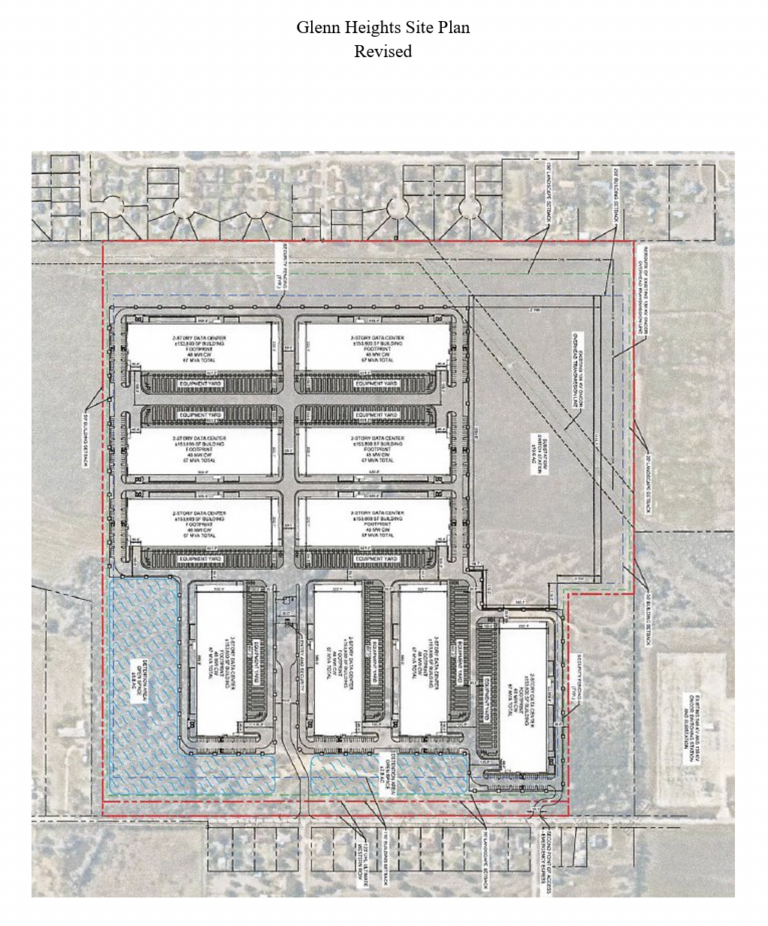
The proposal did not appear overnight. The Planned Development first came before the Planning and Zoning Commission in July 2024, then advanced to the City Council. Following public meetings and discussion, the City Council approved the zoning request on Oct. 15, 2024. Tuesday night’s meeting was not another zoning hearing – it was a Town Hall almost two years after the start of this project.
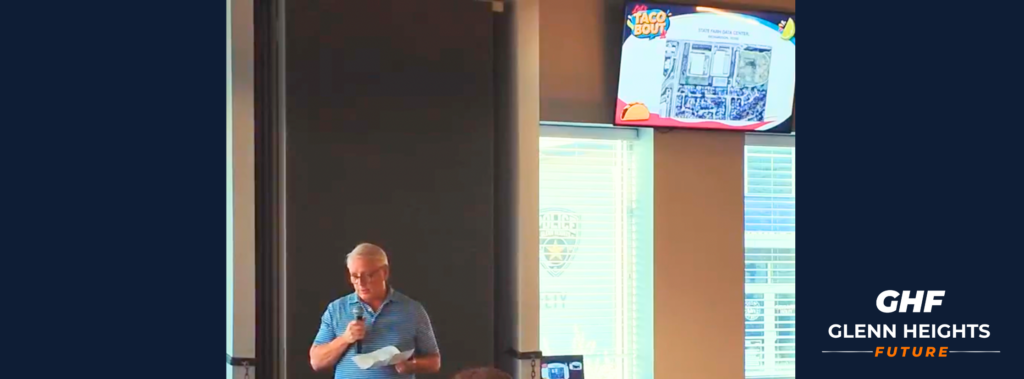
The Town Hall gave residents an opportunity to learn more about a project that had already been approved nearly two years ago and to ask questions about what comes next.
The developer’s presentation focused heavily on the project’s benefits. That is understandable. Every developer presents the strongest case for a project. Residents, however, are equally justified in asking difficult questions. Every major development brings opportunities and tradeoffs. Rarely is anything entirely positive or entirely negative.
Likewise, reducing the discussion to a simple zoning change did not help residents understand the bigger picture.
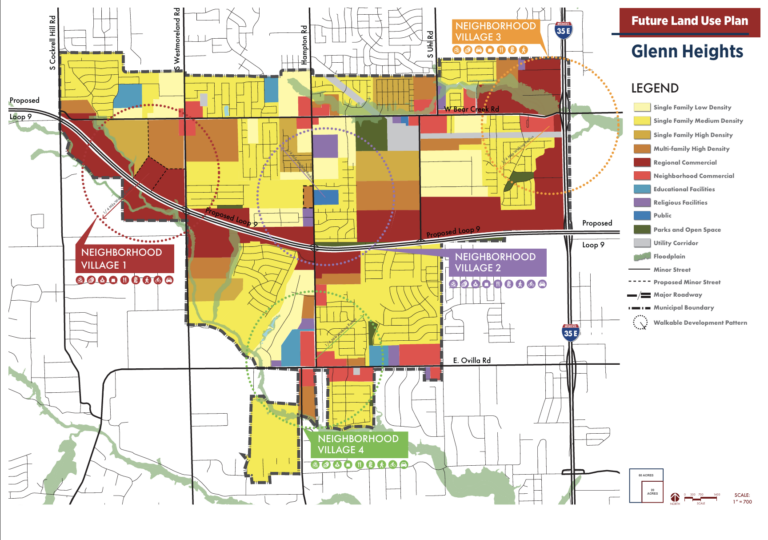
During the meeting, it was stated that the property had been zoned residential prior to the City Council voting to approve the zoning change. While technically true, that explanation leaves out an important part of how development works in Texas.
Property owners often request zoning changes or Planned Developments. Glenn Heights has approved many such requests over the years. In fact, much of the city’s residential growth exists today because previous councils approved changes from the city’s original land use plans. The Future Land Use Map has evolved over time as development opportunities have changed. That process is neither unusual nor unique to this project.
Another point discussed during the meeting involved sales tax revenue.
The developer highlighted future sales tax generated by the project. Residents should understand that Glenn Heights does not retain every penny of local sales tax. One cent of the city’s two-cent local sales tax is dedicated to DART. Using a simplified example, if a project generated $1 million in taxable sales, the city’s share would be substantially less after the required allocations. One cent on $1 million in taxable sales is $10,000.
Councilman Bruton asked the developer what the project was expected to generate for the city. No specific figure was provided during the discussion.
That does not mean the project has no financial value. It simply means residents deserve to understand exactly how those numbers work rather than hearing only the headline figures.
Throughout the evening, many residents asked a familiar question.
Why not a grocery store?
Why not another type of commercial development?
Those are fair questions. For years, some former elected officials described Glenn Heights as a bedroom community. In recent years, however, residents have increasingly pushed for a different vision. They have asked for more retail, more restaurants, more shopping options, and more destinations that keep tax dollars inside the city and enhance the quality of life.
Those priorities deserve to remain part of the conversation.
It is also important to recognize why the previous City Council likely approved the project.
Based on the public discussions that took place in 2024, council members were presented with a project that promised millions of dollars in investment, funding for park improvements, additional property tax revenue and an opportunity to strengthen the city’s financial position. Whether someone agrees with that decision or not, it is understandable why those benefits appealed to the council at the time.
At the same time, residents are right to ask why North Texas continues to attract clusters of data centers, including several in our neighboring city of Red Oak. Questions about regional growth, electrical demand, water usage, long-term planning, and future development are reasonable. Asking those questions does not make someone anti-growth. It makes them an engaged citizen. Current Councilman Hobbs asked the question in the Town Hall about the cluster here in the region, and Councilwoman Washington said she needed to review all the information, as neither of them was on the Council when this zoning change was approved.
During the meeting, the mayor used an analogy comparing good money and bad money. Afterward, one resident shared a different perspective with me.
“This is bad money.”
That simple statement reflects the visible turbulence that now exists within the community.
Reasonable people can disagree.
The zoning decision has already been made. If the project ultimately moves forward, including receiving the approvals necessary for its energy needs, it will bring additional revenue to Glenn Heights. It will also bring new responsibilities for city leaders to ensure residents receive the benefits they were promised and that the remaining questions are answered openly and honestly.
Most importantly, Tuesday night’s meeting demonstrated why public participation matters.
Whether you support the data center or oppose it, continue attending council meetings. Continue asking questions. Continue holding elected officials accountable. Government works best when residents stay informed and stay involved.
Glenn Heights deserves honest conversations about both the opportunities and the challenges facing our city.
The Mayor said during the June 30th Town Hall that the Data Center discussion will be added to the July 21, 2026 City Council Meeting Agenda. Residents are encouraged to attend and participate during public speaking opportunities.
*Editor’s Note: Will Busby was present at the Council Meetings when the Glenn Heights Data Center Zoning Case was discussed.
About Glenn Heights Future
Glenn Heights Future is an independent community information project dedicated to sharing public information, government documents, meeting summaries, and community updates. Glenn Heights Future is not affiliated with, endorsed by, or operated by the City of Glenn Heights or any governmental entity. Information is provided for educational and informational purposes, and readers should consult official sources for final decisions, policies, and records.
Follow the full project: See GHF’s Glenn Heights Data Center timeline, Chapter 380 agreement, source documents and continuing coverage: www.glennheightsfuture.com/data-center