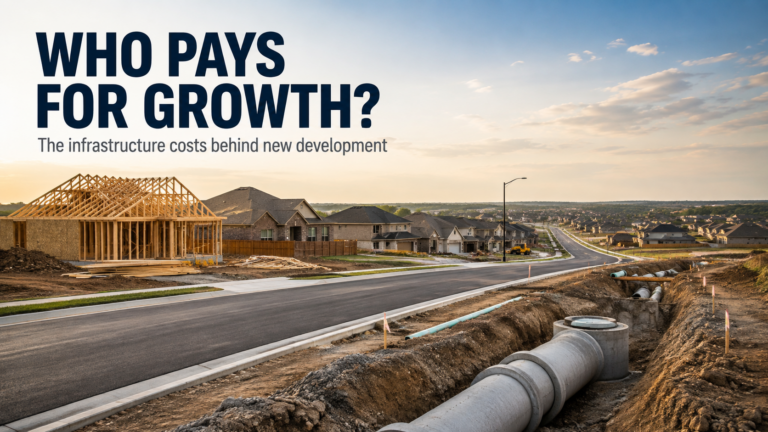
GLENN HEIGHTS — Nearly 3,000 residential units remain in Glenn Heights’ development pipeline, but one number remains unknown: the total cost of the infrastructure and city services that continued growth will require.
City revenues tied to development activity are increasing. New construction continues adding property to the tax rolls. Infrastructure and service demands are expected to grow alongside that development.
Glenn Heights Future examined some of those issues Monday in “Who Pays for Glenn Heights Growth?”, which looked at impact fees, infrastructure costs, city revenues and how the city plans to fund services and improvements associated with continued development.
Five numbers help put the larger picture into perspective.
Nearly 3,000
Residential units pending or under construction
The GHF Development Tracker currently identifies nearly 3,000 residential units as pending or under construction across Glenn Heights.
That figure includes a combination of single-family homes and multifamily development, making residential construction the overwhelming majority of major development currently moving through the city.
Additional residents can increase demand for police and fire services, streets, water and wastewater infrastructure, inspections, parks and other city operations.
The city’s proposed 2026-27 budget acknowledges that connection. City officials identify future residential development as one reason Glenn Heights will eventually need additional staffing for public safety, public services and utilities.
Growth also creates infrastructure demands beyond individual developments. Work continues on the East Bear Creek Road expansion, while the city identifies additional planning needs for South Hampton and South Westmoreland roads. Glenn Heights also expects to issue bonds to begin design work connected to a future West Bear Creek Road expansion.
Nearly 3,000 units, therefore, represent more than housing construction. They also represent potential new residents who will use city infrastructure and services.
$1.910 billion
Glenn Heights’ certified taxable value
Glenn Heights enters the upcoming fiscal year with approximately $1.910 billion in certified taxable property value, according to the proposed 2026-27 budget.
Certified taxable value increased 1.25% this year, which the proposed budget identifies as the city’s lowest growth rate in seven years.
The relatively small increase comes as substantial residential development remains pending or under construction across the city. Timing accounts for part of that difference.
Development can spend years moving through planning, infrastructure construction, homebuilding and eventual completion before its full taxable value appears on the city’s certified tax roll.
City officials do not expect the slower taxable-value growth to continue beyond the coming year. The proposed budget anticipates additional construction value reaching the tax rolls as development continues.
The figures provide an important distinction when looking at current growth. Development planned or under construction does not necessarily appear at its full value on the current certified tax roll.
$261,062
Estimated property tax revenue from new property
New property added to the tax roll is expected to generate approximately $261,062 in city property tax revenue during the upcoming fiscal year, according to the proposed budget.
That figure does not represent the eventual tax revenue from every subdivision, apartment project or development currently moving through the pipeline.
Instead, it represents revenue associated with new property added for the current tax year.
Future completed construction could expand the city’s tax base further as additional property reaches the rolls.
Development-related expenses and revenues also occur at different stages. Planning, inspections and infrastructure work can occur while projects remain under construction, while property tax revenue changes as completed property is added to the tax roll.
$847,500
Projected licenses and permits revenue
Some financial effects of Glenn Heights’ construction activity are already visible in the proposed budget.
Licenses and permits are projected to generate $847,500 during the 2026-27 fiscal year, according to page 21 of the proposed city budget.
That represents a 35.2% increase from the current amended budget.
Higher development activity is one reason cited for the increase.
Permit and licensing revenue provides one example of revenue associated with development activity before completed construction contributes its full taxable value through property taxes.
Impact fees provide another potential revenue source.
Glenn Heights recently completed a new impact fee study after its ability to collect the fees temporarily lapsed. The proposed budget says the city is now positioned to begin collecting impact fees again.
Those fees are intended to help fund eligible capital improvements or facility expansions attributable to new development.
Development can therefore contribute to city finances through several revenue sources during different stages of construction and completion.
Unknown
The total cost of future growth-related needs
One significant number has not yet been calculated.
Glenn Heights knows thousands of residential units are moving through its development pipeline. The city knows construction activity is producing additional permit revenue. Officials also expect new construction eventually to increase taxable property values.
The total cost associated with future growth-related infrastructure and service needs remains undetermined.
The proposed budget identifies future staffing needs tied to public safety, public services and utilities. Road expansions will require additional investment. Water and wastewater infrastructure must also accommodate additional demand.
Regional wastewater costs present another financial consideration. The proposed budget says increased wastewater expenses cannot be absorbed under the existing rate structure, although the exact effect on Glenn Heights customers remains unresolved.
Impact fees can offset some eligible infrastructure costs. Developers can construct or contribute toward certain improvements. Grants and outside appropriations can reduce the amount the city must finance locally. New property can eventually generate additional tax revenue.
City Manager Clifford Blackwell addressed the broader issue in his proposed budget message.
“The impacts of additional growth and the strains it places on the infrastructure will require the City to re-evaluate its priorities and develop a funding plan to address its needs,” Blackwell wrote.
Several pieces of that funding picture are already taking shape.
Impact fees are expected to resume following completion of the city’s updated study. New construction continues adding property to the tax rolls, while permit activity is generating additional revenue. Grants and other outside funding also remain available for certain infrastructure projects.
Additional costs are developing at the same time. The proposed budget identifies future staffing needs connected to residential growth, while road, water and wastewater projects remain part of the city’s infrastructure planning.
No single figure currently represents the total cost of those future needs.
That leaves the fifth number unknown as Glenn Heights continues adding residents, infrastructure and taxable property during the coming years.